
Erick Robinson's China Patent Blog
  • Blog
  • Contact
  • Blog
  • Contact

Great article on IPLaw360 by Matthew Bultman On Chinese Patent Litigation

4/19/2017

1 Comment

 
Picture
Excellent article on patent litigation in China, and it even includes several quotes from me:
  • “No place in the world can you spend less than a half-million dollars and get an injunction worldwide in less than a year,” said Erick Robinson, the director of patent litigation at Beijing East IP Ltd. “That’s the promise of China.”​
  • Long criticized as being lax in protecting intellectual property rights, China hasn’t always been the most attractive place for foreign companies to file patent suits. Even a few years ago, Robinson said, he wouldn’t have advised filing there.
  • In the past, “the words 'intellectual property' and China being used in the same sentence was usually in the form of a joke,” Robinson said. But in more recent years people “began to realize they were serious about putting forth a real enforcement scheme.”
  • But last year China’s highest court issued an important ruling that shifted the burden of proof in situations in which damages information is difficult to obtain. “It basically was a sea change because now all of a sudden, instead of everything by definition being capped at $150,000, you can take advantage of the damages law in China that prior to that ruling you couldn’t,” Robinson said.
  • Damages are “no longer a joke, which is interesting because the real reason to file in China until this has always been the injunction, which is virtually guaranteed,” Robinson said. “Now not only do you get the injunction, but you also get the possibility of legitimate damages.

Check out the full article here:  https://www.law360.com/ip/articles/914779/china-becoming-more-attractive-for-foreign-patent-owners

1 Comment

Why Apple's fight against Qualcomm in China is ill-conceived

4/10/2017

1 Comment

 
Picture
Apple recently sued Qualcomm in the US and the UK, claiming Qualcomm had been significantly overcharging for the use of basic patents and generally abusing its position as a market leader.  These lawsuits were filed quickly after the Federal Trade Commission, in one of its final acts under the Obama administration, announced that it would sue Qualcomm for violations of anti-competition law.  

Today, Qualcomm filed its Answer and Counterclaims to Apple's California lawsuit, detailing the
 value of the technologies Qualcomm has invented, contributed, and shared with the industry through its licensing program, as well as Apple's failure to engage in good faith negotiations for a license to Qualcomm's 3G and 4G standard essential patents on fair, reasonable and non-discriminatory terms.  The filing also claims that Apple:
  1. Breached agreements and mischaracterized agreements and negotiations with Qualcomm;
  2. Interfered with Qualcomm's long-standing agreements with Qualcomm licensees that manufacture iPhones and iPads for Apple;
  3. Encouraged regulatory attacks on Qualcomm's business in various jurisdictions around the world by misrepresenting facts and making false statements;
  4. Chose not to utilize the full performance of Qualcomm's modem chips in its iPhone 7, misrepresented the performance disparity between iPhones using Qualcomm modems and those using competitor-supplied modems; and 
  5. Threatened Qualcomm in an attempt to prevent it from making any public comparisons about the superior performance of the Qualcomm-powered iPhones. ​

Picture


​My personal view on these lawsuits generally (keep in mind I am a former Qualcomm'er) is that essentially, Qualcomm could have chosen one of two paths:  (1) ask for reasonable royalty rates and rarely litigate, or (2) ask for high royalty rates are litigate on a regular basis.  Qualcomm chose option (1) a long time ago, and the fact that it has so rarely sued on its best-of-class patent portfolio shows both the quality of the portfolio as well as reasonableness of its licensing terms. If anyone wants more details, please email me, but today's post relates to Apple's attack on Qualcomm in China.

In China, Apple filed two lawsuits, both in Beijing.  In the first, Apple is seeking 1 billion yuan (over $145 million USD), according to Reuters, claiming that Qualcomm violated China’s anti-monopoly law and harmed it by abusing the company’s market position as a dominant chip supplier.  The second lawsuit focuses on patent deals, with Apple asking for the court to rule on the terms of a licensing agreement between the two companies. 

On the surface, the Beijing filings seem to make sense for Apple.  After all, Qualcomm receives over half of its revenue from China.  Plus, in December 2013, the NDRC (National Development and Reform Commission) announced it was investigating Qualcomm for violating China’s 2008 AML (Anti-monopoly Law) and in February 2015 Qualcomm settled with the NDRC for a $975M fine, and for Chinese phones sold in China, a requirement to offer separate licenses for certain patents, with licensees paying 3.5% for devices using only its 4G technology and 5% for 3G-only devices or those that use both cellular technologies.  Also, in addition to the rates being cut, so was the based to which those rates are applied.  Instead of applying the percentage to the wholesale price of the handset, Qualcomm now applies it to 65% of the net selling price of a device, a lower figure than the wholesale price.  So there were three decreases:  (A) the rate, (B) the net selling price instead of the wholesale price, and (C) getting only 65% (of the wholesale price).  

So attacking a company while it is down makes sense, right?  But while Qualcomm emerged from the NDRC matter bloodied and battered, it did, in fact, emerge.  Not only did it survive, but through the settlement with the NDRC, Qualcomm had received an official government blessing for its licensing protocol -- at least with Chinese phone-makers selling in China.  The old saying, "What doesn't kill you makes you stronger" applies aptly to Qualcomm here.  While the Chinese government via its Anti-Monopoly Agencies may not love Qualcomm, it made a deal with them.  

Note, too, that Qualcomm is a necessary supplier to many Chinese companies, including the many smartphone makers.  A supplier is not an an enemy.  A competitor is -- especially a foreign competitor that has traditionally never been a friend of China.  What?  Apple?  But Chinese people love Apple, right?  Well, I am not sure that was ever true, and it seems even less true recently.  And even if it is, it is not for the love of functionality, but rather the prestige of the iPhone as a "brand-identity status symbol" like Gucci or Louis Vuitton.  This does not make Apple a friend of China.  Not by a long shot, especially when Apple has a long history of not giving back to China. 

Traditionally Apple has taken the vast majority of the revenue it has obtained in China and sent it back to the US via Ireland.  If Apple were to leave China or be enjoined from selling iPhones here, tens of thousands of Chinese workers would be unemployed... for three weeks.  Then they would move across the street or even to a different part of the same factory to build phones for Huawei, ZTE, Xiaomi, Oppo, Vivo, Meizu, or any of the other dozen or so Chinese smartphone makers.  These Chinese companies would not only fully pay Chinese taxes, but also would reinvest in the country, its people, and the next generation of innovators.  As for Apple, investing a billion dollars in a Chinese e-taxi company does not make up for years of lack of investment in China.

So Qualcomm is a supplier to some of China's most important companies and Apple is a direct competitor of these companies.  Not good for Apple.  Further, what Apple is essentially asking for through its Chinese lawsuits is to be treated by Qualcomm the same as Chinese phone-makers are now treated based on the NDRC settlement.  Right now, Chinese phone-makers get around a 33% discount on the most important and expensive part of the phone:  the chips.  This allows the Chinese companies to have a huge advantage in their home market.  This is especially true for Samsung because it, like the Chinese smartphone companies, uses the Android operating system.  Since Samsung has the same OS, Chinese consumers are treating smartphones as fungible.  Much like desktop computers in the late 1990s and early 2000s, no one cares about the brand of the phone/computer, only the specs like processor speed, memory, and connectivity.  Because Samsung phones are very similar to other Android phones in China (except the Chinese phones usually do not explode), and are generally much more expensive even without the discount Chinese companies receive on Qualcomm chips, the Korean company is having a hard time in China.

Apple has the "bling" advantage as a luxury brand, and also has a distinctive OS.  So the iPhone is not fungible.  But it is still a competitor to many Chinese companies.  Further, if Apple wins against Qualcomm in China, then it will have essentially the same advantage that the Chinese smartphone companies have.  This would drive sales away from Chinese companies to a company with an established record of not investing meaningfully in China.  That would be bad for the Chinese economy and its people.  

Finally, even if Apple all of a sudden did want to become a fully-contributing friend of China, its basic business model prevents this.  Apple is a hyper-secretive, closed, uber-proprietary company.  Anyone who has visited the Apple campus or any Apple facility knows this.  What most people do not know is that Apple does not even allow many companies to refer to it by name on their own campuses but rather by code words, either in conversations or in email.  In short, Apple does not play nice with others and is as closed a company as exists in technology.  This modus operandi has produced some amazing products such as the iPod, iPhone, and iPad.  But there is simply no way to partner with Apple in any meaningful way technologically (other than as an add-on).  And this is exactly what it means to be a friend of China.  Long-term success in China requires not just investing money, but sharing technology with Chinese partners.  For example, Intel's buy into Tsinghua Unigroup was ingenious.  They became a Chinese company, developed instant "ears to the ground," and began the cross-pollination that China wants and needs as it continues to develop as an innovation and consumer nation.  Investing in a taxi company just isn't the same.

So where does that leave Apple?  It becomes a company attacking a licensing scheme recently blessed by the Chinese government.  Also, Apple is asking for what China cannot, or at least should not, provide:  the same advantage that its own companies have in terms of a discount on Qualcomm chips.  All this by a company that directly competes with China's fastest growing companies and that has a record of not being a friend of China.  This is not a good place to be.

Even if Qualcomm does not fire back with patent lawsuits or other actions in China, Apple is fighting a battle here it is likely not to.  While I do not agree with the essence of the lawsuits in the US and UK, at least they make sense and have a reasonable chance of success, or at least a small chance of huge defeat.  The rules are different in China, and American companies still seem to keep forgetting this.  

China is like a broad river with a swift current.  To do well here, a company need only stay somewhere safely within the banks and aim downstream.  With such a strategy, quick and effortless success is virtually guaranteed.  But for those that are so "creative" or "better than others" that they think they can move upstream or outside the banks of the river, defeat is equally assured.  Apple has no upside here, and there are many bad things that could happen.  They would be well-advised to stay in the middle of the river and head downstream.  

​

1 Comment

April 06th, 2017

4/6/2017

1 Comment

 
Picture
As contingency fee stalwarts in the US retreat, in China we love contingent fee patent cases!  Bring us your patents!

https://goo.gl/5ohXpS


1 Comment

Guest Post: Yes, you can get an injunction in a SEP case in China!

3/31/2017

2 Comments

 
Picture
Today, we have a guest post from my colleague at Beijing East IP, Austin Chang.  Austin provides a summary of the IWNCOMM v. SONY standard-essential patent decision by the Beijing IP Court (IWNCOMM v. Sony (2015) Jing Zhi Min Chu Zi No. 1194).

PictureAustin Chang
Plaintiff Xi’an Xi Dian Jie Tong Radio Network Co. (“IWNCOMM”) filed a patent infringement action against Sony Mobile Communication (China) Co., Ltd. (“Sony”) on July 2, 2015 for infringing IWNCOMM’s standard-essential patent (“SEP”) No. ZL02139508.X for a mandatory national WAPI standard.  According to the judgment, Sony was ordered to (1) immediately cease infringement of IWNCOMM’s SEP found in 35 of Sony’s mobile handsets, (2) pay damages of RMB8.62 million (approximately USD1.25 million), and (3) pay reasonable litigation costs of RMB474,194 (around USD69,000).
 
This is a first instance decision and is appealable to the Beijing High Court within 15 days for IWNCOMM (as a domestic entity) and within30 days for Sony (as a foreign entity) upon receipt of the decision. We will continue to provide updates regarding any further developments.
 
Please see below for the summary of the ruling:

  1. The court found that the report produced by the State Radio Monitoring Center Testing Center (SRMCTC) determining that Sony’s handsets possess the WAPI function shall be deemed as valid, because the SRMCTC is an authoritative national test center, the report submitted by Sony also shows identical results, and Sony failed to provide evidence to prove that the lack of access point and access server specifications influenced the result of the report. Therefore, the report is sufficient to establish that Sony’s handsets possess the WAPI function. 
  2. The court also found that Sony implemented testing of the WAPI function. Sony argued that although the Requirement of Quality Control System (“Requirement”) is a national standard, it is merely suggestive and not mandatory. Moreover, Sony also submitted documents showing that it has tested the WAPI function during the development phases. Sony, however, failed to submit documents proving methods used to test the WAPI function other than those stated in the Requirement. The court reasoned that since Sony had admitted it had tested the WAPI function and failed to produce documents to prove this testing was performed other than the Requirement, the court had reason to conclude that Sony followed the Requirement in testing the WAPI function.
  3. The court reasoned that under the current legal framework, patent exhaustion of methods only applies to “products directly obtained following the patented method,” namely, “manufacturing method patents.” Furthermore, the exhaustion doctrine does not apply to a pure “use method patent.” Here, the disputed patent is a use method patent, not a manufacturing method patent.  Therefore, IWNCOMM’s use of the manufacturing method patent when selling its detection equipment does not exhaust its patent right.
  4. The court reasoned that even if the disputed patent is a SEP it does not affect the determination of whether there is a patent infringement. Thus, any unauthorized use of a patent, such as in this case, is subject to a determination of patent infringement.
  5. The court reasoned that a patentee’s commitment to a FRAND statement is not equal to a valid licensing agreement. Thus, even if IWNCOMM has committed to license under FRAND terms, this does not mean IWNCOMM actually licensed its patent to Sony.
  6. The court reasoned that, in general, indirect infringement should be based upon the existence of direct infringement. However, this does not require that the patentee prove direct infringement by another party. Rather, the patentee need only prove that the use of the alleged infringing product according to the product’s default use method is covered by the patent’s claims. The issue of whether third-party users should bear infringement liability is unrelated to the establishment of indirect infringement. Here, Sony’s use of the WAPI module has no other substantive use except to implement the disputed patent, thus Sony’s inclusion of the WAPI module in its phones without IWNCOMM’s authorization constitutes indirect infringement.
  7. In determining whether an injunction should be applied as a remedy if the dispute involves a SEP, the court reasoned that such determination should be based on mutual beneficial agreement, and whether there were faults made during the negotiation of the agreement. Specifically, where neither party is at fault, or the patentee is at fault and the implementer is not, the patentee’s request for an injunction shall be denied. Where the patentee is not at fault, but the implementer is at fault, the patentee’s request for an injunction shall be granted. Where both parties are at fault, the court shall balance the interests of both parties when making the decision for the injunction request.
  8. In a license negotiation regarding a SEP, the patentee has no duty to provide claim charts if the intended licensee possesses sufficient documents to determine the likelihood of infringement. In this case, Sony had been uncooperatively asking IWNCOMM to provide claim charts since the parties began its negotiation in 2009 all the way through 2015 at the same time that Sony had, in its possession, sufficient documents to make a determination regarding infringement of the disputed patent. The court determined that such intentional delay warranted IWNCOMM’s request for an injunction.
  9. In determining the amount of monetary damages, the court applied treble damages based on the IWNCOMM’s evidence, including agreements made with other licensees not involved in this case. The court also supported IWNCOMM’s claim of reasonable expenses incurred for this litigation, including its attorney fees of RMB400,000 (approximately USD58,000). 

2 Comments

Come join me in Beijing at the USPTO-MofCOM Licensing Conference on March 28

3/23/2017

0 Comments

 
Picture
I will be speaking next week on open source licensing in Beijing at a conference jointly sponsored by the US Patent Office (USPTO) and the Ministry of Commerce (MofCOM) of the Government of China.

The USPTO and MofCOM are jointly sponsoring a program on cross-border technology licensing on March 28 in Beijing at Renmin University’s law school. A draft agenda is available here
. The USPTO/MofCOM program is intended to provide an opportunity to discuss cross-border IP licensing, including China’s Technology Import Export Regulation (“TIER”) and its impact on US technology collaboration and licensing. The program builds upon prior programs with SIPO that explored similar topics. Please email Ms. Liu Jia at [email protected] to RSVP as soon as possible.

​Thanks to my colleague Mark Cohen of the ChinaIPR.com blog for recommending me to speak!

0 Comments

Press release for my joining Beijing East IP

3/16/2017

0 Comments

 
I have had a number of inquiries regarding joining Beijing East IP, so I am pasting below the press release.  If anyone would like additional information or would just like to chat, email me at [email protected]!
Picture
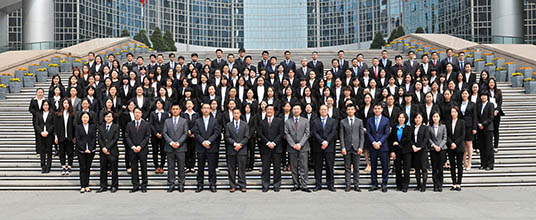
Beijing, P.R. China (March 15, 2017) Beijing East IP, the top intellectual property firm in China, has hired Erick Robinson as Director of Patent Litigation.  Mr. Robinson was most recently Chief Patent Counsel Asia Pacific at Rouse International in Beijing and Shanghai.  He will be based in Beijing.
 
Mr. Robinson previously served as Director of Patents for Qualcomm in Asia, where he managed a broad range of IP issues ranging from patent drafting, prosecution, licensing, and litigation, to regulatory, policy, and antitrust matters.  He also managed open source issues for Qualcomm Atheros, and created, implemented, and enforced open source protocols.  Before Qualcomm, Erick managed patent and open source matters for Red Hat.
 
Mr. Robinson is an experienced U.S. patent attorney and trial lawyer with a technical background in computer science and physics, as well as biotechnology.  He is a trusted authority on patent and antitrust law in China, and has been selected as one of the Leading 300 IP Strategists Worldwide by IAM for the past two years.  The author of the influential ChinaPatentBlog.com as well as numerous articles on Chinese patent litigation, Mr. Robinson is frequently quoted in the Wall Street Journal, Financial Times, Intellectual Asset Management, and other publications on Chinese patent and antitrust issues. 
 
Erick began his legal career at a Wall Street law firm negotiating and drafting technology agreements, and then moved to Texas, where he managed and tried patent cases for top U.S. law firms Weil Gotshal and McKool Smith. During his time in Texas, he managed bet-the-business patent cases on both the plaintiff and defendant side for Fortune 100 companies to sole inventors.
 
“I am excited and honored to join such a prestigious firm as Beijing East IP,” Mr. Robinson said. “This is the best IP firm in China, and they aggressive, connected, and talented.  I am especially looking forward to working with Dr. Lulin Gao, the father of the Chinese patent system.”
 
“We are delighted to welcome Erick to our firm and entrust him with the responsibility to further strengthen firm’s litigation practice,” said Dr. Lulin Gao, founder and Chairman at Beijing East IP, a 2016 inductee into the IP Hall of Fame, and founding commissioner of SIPO.  “We are excited to see this innovative combination of a senior US litigator and a well-established and connected China IP full service firm. We look forward to creation of the best litigation practice in China on patent and antitrust,” said Mr. Dragon Wang, Vice President at Beijing East IP.

 
0 Comments

I Have A New Firm:  Beijing East IP!

3/15/2017

0 Comments

 
Picture
Picture
I am excited and proud to announce that I have changed firms.  Today I officially joined Beijing East IP as Director of Patent Litigation.  I will be based in Beijing.
 
The firm is headed by Dr. Lulin Gao, the father of the Chinese patent system and the first commissioner of the Chinese Patent Office (SIPO).  Dr. Gao is the most connected person in IP in China.  Beijing East has over 250 IP specialists, and a vast group of technical experts, including many top trial lawyers appointed by the Supreme Court for Patent Litigation.  No other firm has the technical resources, legal expertise, and relationships of Beijing East IP. 
 
It is an honor to be associated with such an impressive group of lawyers and technical experts. Beijing East IP is the best IP firm in China, and they are aggressive, connected, and talented.  I am looking forward to working with this amazingly experienced and knowledgeable team. 
 
You can email me at my new firm at [email protected]. 

0 Comments

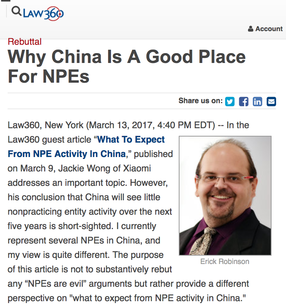
My IP Law360 response:  why China is a good place for NPEs

3/14/2017

0 Comments

 
PictureMy IP Law360 Article is Online
My response to the recent IP Law360 article by Xiaomi's Jackie Wong is now online.  In my rebuttal article on IP Law360, I explain the following:  
  1. ​Damages are increasing in China, such as the recent $7.2M award in a small domestic v. domestic patent case;
  2. Injunctions are the magic of China, as they are virtually guaranteed;
  3. #2 creates tremendous leverage because of not just the huge sales market in China, but the huge manufacturing market, which creates a worldwide injunction;
  4. There is a difference between preliminary injunctions (including interlocutory or in-case injunctions) and final injunctions;
  5. NPEs are treated no differently than any other patentee in China, including regarding injunctions;
  6. Foreign plaintiffs win more frequently than Chinese plaintiffs;
  7. There is no need for NPEs to establish an affiliate on the ground in China to purchase or assert patents here;
  8. Why Chinese patent litigation is advantageous for all plaintiffs, including NPEs;
  9. How NPEs can help China; and
  10. How China can help NPEs. 

Let me know what you think of the article!  Email me at [email protected] or contact me on LinkedIn!

0 Comments

Bad Facts:  IP Law360 Article on NPEs in China Gets It Wrong

3/11/2017

0 Comments

 
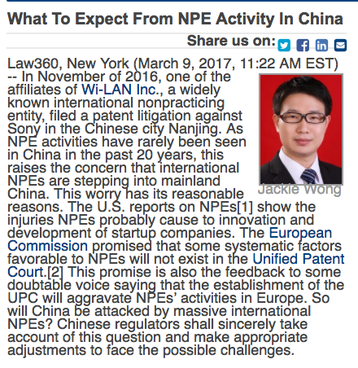
In an article entitled "What To Expect From NPE Activity In China" published today at IP Law360, Xiaomi Legal Counsel Jackie Wong makes several factual and analytical errors.  IP Law360 has graciously allowed me to respond.  Look for my response early next week on the site!  
Picture
0 Comments

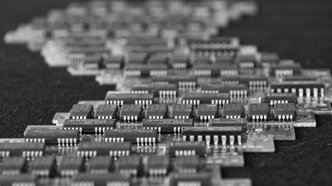
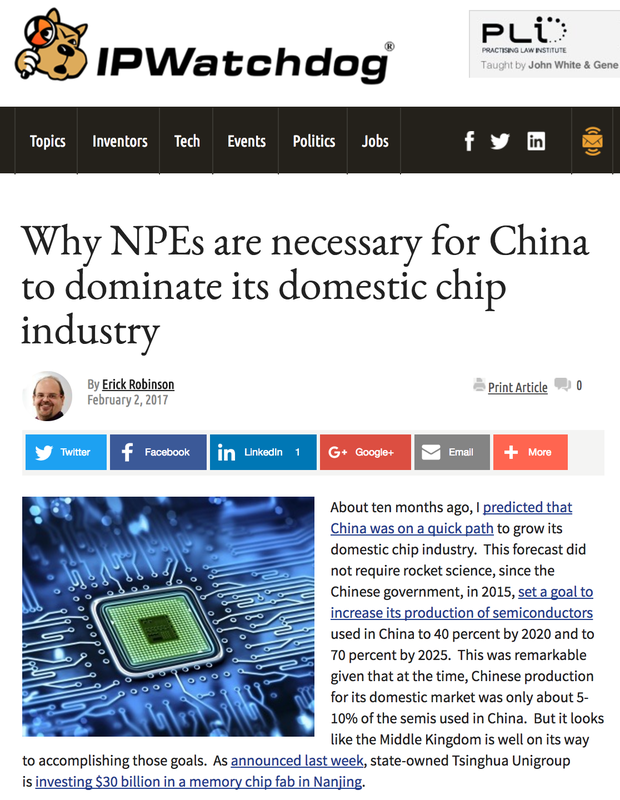
My IPWatchdog article on the semiconductor industry in China and why patents and NPEs are essential to the success of the domestic industry.  

2/2/2017

0 Comments

 
Picture
My article on the semiconductor industry in China and why patents and NPEs are essential to the success of the domestic industry.  Thanks, Gene Quinn, for the opportunity!

http://www.ipwatchdog.com/2017/02/02/npes-necessary-china-dominate-domestic-chip-industry/id=77927/
0 Comments

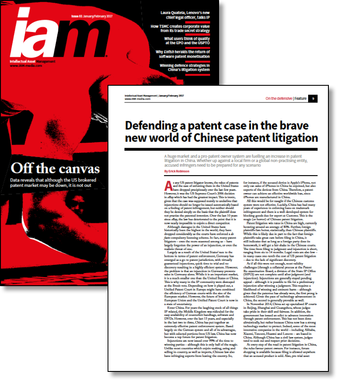
My IAM Magazine Article:  Defending A Patent Case in the Brave New World of Chinese Patent Litigation

1/31/2017

0 Comments

 
Picture
I have had a number of requests for a copy of my IAM Magazine article on defending a patent case in China.  Since the new edition of IAM Magazine is now available, IAM has been gracious in allowing me to freely distribute the article.  You can download a PDF of the article here.  

​Please let me know your thoughts!

0 Comments

Prediction fulfilled:  China taking steps to dominate its domestic chip industry, and why NPEs are necessary to achieve this goal

1/28/2017

1 Comment

 
Picture
About ten months ago, I predicted that China was on a quick path to grow its domestic chip industry.  This forecast did not require rocket science, since the Chinese government, in 2015, set a goal to increase its production of semiconductors used in China to 40 percent by 2020 and to 70 percent by 2025.  This was remarkable given that at the time, Chinese production for its domestic market was only about 5-10% of the semis used in China.  But it looks like the Middle Kingdom is well on its way to accomplishing those goals.  As announced last week, state-owned Tsinghua Unigroup is investing $30 billion in a memory chip fab in Nanjing.

Keep in mind that Intel bought a 20% stake in Tsinghua Unigroup a little over two years ago.  I have regularly called this move by Intel likely the best strategic move by an American company in China ever.  Why?  Other than the obvious, it (1) instantly made Intel a Chinese company (in part -- a very political part) and (2) gave Intel a remarkably direct conduit to the Chinese government.  This latter point cannot be underestimated, as it should allow Intel to hear about any political or competitive problems much earlier.  The affiliated Tsinghua University is not just one of (if not the) top university in China, but it is very politically connected.  For example, it is the alma mater of President Xi Jinping.  This large investment by Tsinghua Unigroup makes Intel's move even more brilliant, because they can be a part of the inevitable growth and eventual domination of the Chinese domestic semiconductor industry.  

I rarely post anything of any real political nature here, but I did want to point out that China wanting to capture the lion's share of its own chip market makes a lot of sense.  For China, it is a legitimate national security issue.  Keep in mind that semiconductors run every computer, smartphone, or electronic device -- including those that run national security and defense applications.  Imagine what would happen if China made 95% of the semiconductors that run the United States' national defense.  The US government would scream that the sky is falling and immediately act to change this.  China has the right to protect its country and its people.  China justifiably wants to have a good share of its own chip market.

Obviously, there are also financial reasons for this.  For example, China's smartphone market is the world's largest ( interestingly, India is second, in front of the US).  Apple sells more iPhones in China than anywhere else.  Qualcomm gets 53% of its revenue from China.  China needs to keep more revenue from its mobile industry.  

Since this is, after all, a blog focused on patents, what does all of this have to do with patents?  The answer lies in how China will achieve its lofty 40% and 70% semiconductor domestic market share goals by 2020 and 2025, respectively.  As noted, China is making huge capital investments.  This will lead to less "brain drain" from China to the West, as well as outright increases in innovation in this space.  Further, China will provide financial supports for domestic companies to outcompete foreign competitors.  But this will not be enough.  

We will likely soon begin to see more antitrust actions by the Chinese government.  But this, too, will be insufficient.  Patents and patent enforcement will provide the necessary supplement to ensure China dominates its own market.  (Again, because Intel is now connected to China, this will help them if not flourish, at least survive in, China.)  The problem is that most of the best-quality Chinese patents are owned by non-Chinese entities.  Other than the Chinese tech behemoths such as ZTE and Huawei, Chinese technology companies, including Tsinghua Unigroup, do not own many patents relative to their foreign counterparts, and the patents they do have are not as good as those owned by foreign competitors.  

The current lack of quality is nothing to be ashamed of.  China has generated a huge number of patents in a very short time.  In fact, more than 1 million patent applications were filed in China in 2015, but 96% were filed only in China.  This is changing quickly before our eyes, but for now, the best Chinese patents are those that are originally filed in the US, Europe, or Japan and then later filed in China as a counterpart to these foreign filings.  China has moved faster in patent protection and innovation than any country in the history of the world.  But to achieve more consistent quality, the Middle Kingdom needs a few more years as it shifts from quantity to quality.  This move is akin to the growth path of many technology companies around the world, including the US.  

For instance, when I was senior patent counsel at Red Hat, the company had completed a period of tremendous patent growth.  Unfortunately, because many of these patents were on operating system technology, and unlike Red Hat, its competitors do not freely provide source code, much of the portfolio was of dubious value due to the inability to determine infringement.  During my time there, and in the time since, Red Hat's portfolio has matured from a numbers-based portfolio to more of a quality-based one.  But this did not happen overnight, and neither will it for China.  But it will happen, and it will happen quickly with the emphasis and support currently provided by the Chinese government.  

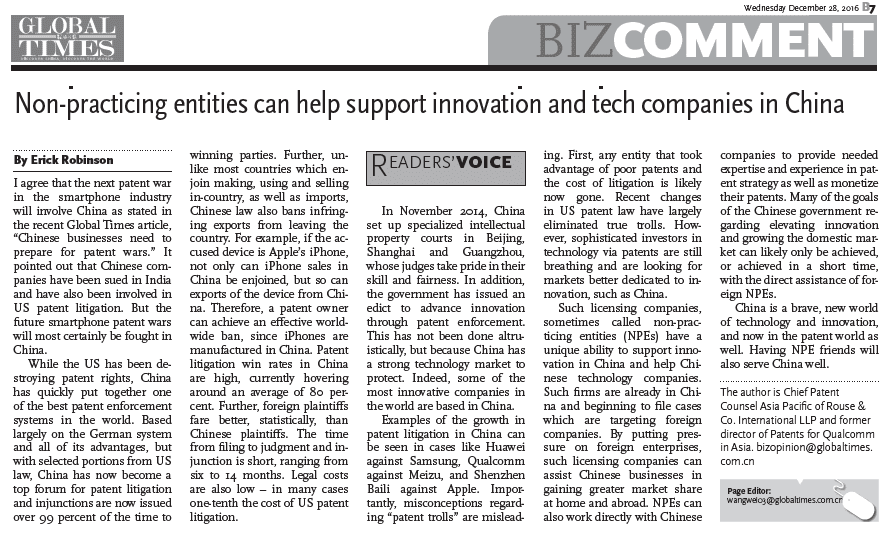
If most Chinese patents owned by Chinese entities are are of lower quality, then how can China use patent litigation to chase away foreign companies to support and grow domestic businesses, especially in the semiconductor industry?  The answer is Non-Practicing Entities (NPEs).  Whether they are called NPEs, licensing companies, Patent Assertion Entities (PAEs), patent trolls, or any other pejorative term, these businesses have decades of experience in licensing, monetizing, litigating, and enforcing patents.  They are fertile ground for advice regarding patent enforcement and strategy for a country and its technology leaders that may be incredibly bright and business-smart, but with little experience in the patent realm.  I recently had an article published in the Chinese state media detailing how NPEs can support innovation and technology companies in China. 

Further, NPEs are uniquely positioned to help China by attacking foreign entities to clear the way for Chinese companies by exerting pressure in ways that only NPEs can.  Even if Chinese semiconductor companies had the necessary patents and experience to engage their foreign competitors, they would risk retaliation from these foreign parties.  NPEs, on the other hand, can unilaterally attack foreigners without fear of retaliatory patent suits.  Although there are a few of antitrust issues, I do not believe that NPEs that act in the best interest of China should, or will, be attacked by the NDRC or any other antitrust agency in China.  Indeed, by being a good "friend of China" NPEs will be exactly what China needs:  an agent to help enact the goal of China to dominate its domestic industries in semiconductors and other fields.  
​

1 Comment

Qualcomm:  The antitrust nightmare continues - this time at home with the FTC as part of a last-minute lawsuit before the new administration takes over.

1/17/2017

0 Comments

 
Picture
My former employer, Qualcomm, has had a difficult last few years regarding antitrust issues. Starting with China in December 2013, the San Diego-based telecom and semiconductor giant has faced numerous governmental investigations regarding its licensing business.  After China, came South Korea (February 2015),  Taiwan and the European Union (December 2015), and now the good ol' USA launching antitrust investigations.

The FTC complaint filed yesterday, Tuesday, January 17 makes three allegations against Qualcomm:
  1. That Qualcomm maintains a “no license, no chips” policy under which it will supply its baseband processors only on the condition that cell phone manufacturers agree to Qualcomm’s preferred license terms. 
  2. That Qualcomm refuses to license standard-essential patents to competitors. 
  3. That Qualcomm extracted exclusivity from Apple in exchange for reduced patent royalties. 

Qualcomm has posted on its website a response to the FTC complaint which states that "Qualcomm believes the complaint is based on a flawed legal theory, a lack of economic support and significant misconceptions about the mobile technology industry. The complaint seeks to advance the interests and bargaining power of companies that have generated billions in profit from sales of products made possible by the fundamental 3G and 4G cellular technology developed by innovators like Qualcomm."

Perhaps most interesting is the fact that the FTC complaint may be politically motivated.  FTC Commissioner Maureen Ohlhausen, who voted against the filing, explained in what she notes is a rare dissenting statement that the Commission’s 2-1 decision to sue Qualcomm is “an enforcement action based on a flawed legal theory that "lacks economic and evidentiary support, that was brought on the eve of a new presidential administration, and that, by its mere issuance, will undermine U.S. intellectual property rights in Asia and worldwide.”  Despite an appeal from members of Congress to refrain from “midnight litigation” with newly created theories that could damage innovation in the U.S., the FTC accelerated the investigation of Qualcomm and directed the filing of the complaint just days before the change of the Administration though only three of five FTC commissioners are in place.

Importantly, the complaint does not allege that Qualcomm charges above fair and reasonable royalties, but rather asserts that Qualcomm held back its IP from competitors and suppliers in an illegal manner.  However, the company states that the FTC is incorrect as Qualcomm has never withheld or threatened to withhold chip supply in order to obtain agreement to unfair or unreasonable licensing terms.  

I do not have a dog in this fight, but on first glance this appears on its face to be another of a long line of steps the Obama Administration has taken to undermine patent rights.  This is great for my practice in China as innovators are chases from the US to Asia, but it saddens me as an American.  Stay tuned as we learn more.
0 Comments

SIPO Deputy Director:  China is willing to enhance intellectual property right (IPR) cooperation with other countries, but opposes accusations and abuse of IPR to exercise trade protectionism.

1/17/2017

0 Comments

 
Picture
Gan Shaoning, deputy director of the State Intellectual Property Office (SIPO), said at a press conference that since the reform and opening-up, China had established a complete and internationally-recognized legal system for IPR protection with Chinese characteristics, including both administrative and judicial protection, and that the system was something that had taken developed countries hundreds of years to achieve.

"Exercising strict IPR protection is not only a demand for the country to attract foreign investment, open up to the outside world, and pursue innovation-driven development, but also an essential requirement for upgrading economic and social development," Gan proclaimed.  "We are willing to enhance IPR cooperation and share our experiences of development with our counterparts across the world.  At the same time, we oppose unfounded accusations and abuse of IPR to exercise trade protectionism."

​Gan vowed to further strengthen IP protection and use of IP to encourage innovation.  Specifically, "China will increase compensation for cases of malicious infringement and crack down on infringement on IPR through revised and improved laws and regulations," Gan stated.  Gan said a guideline, issued by the State Council earlier this month, specified the goals and major tasks for the development of IPR during the 13th Five-Year Plan period (2016-2020).

Interestingly, the plan calls for IP royalties earned abroad will rise from 4.44 billion U.S. dollars in 2015 to 10 billion U.S. dollars in 2020.  Stay tuned, as China continues its rise in importance in the patent world.  Not just in China, but in the West as well.


0 Comments

Excellent commentary on my recent IAM Magazine article

1/11/2017

0 Comments

 
Picture
Picture
Bruce Berman has drafted a thoughtful commentary on my recent IAM article: https://ipcloseup.com/2017/01/11/china-is-poised-to-overtake-the-u-s-as-the-leading-patent-system/.  And unlike the IAM article, you do not have to be a subscriber to see Bruce's analysis.  
0 Comments
<<Previous
Forward>>
    Erick Robinson's Blogs:

    Litigation Funding Blog
    Patent Litigation Blog
    Trade Secret Blog
    PTAB Blog
    China Patent Blog
    AI Law Blog
    Picture
    Picture
    Follow @RobinsonErick

    Subscribe to the China Patent Blog by Email
    Welcome to the China Patent Blog by Erick Robinson.  Erick Robinson's China Patent Blog discusses China's patent system and China's surprisingly effective procedures for enforcing patents.  China is leading the world in growth in many areas.  Patents are among them.  So come along with Erick Robinson while he provides a map to the complicated and mysterious world of patents and patent litigation in China.  

    Author

    Erick Robinson is an experienced American trial lawyer and U.S. patent attorney formerly based in Beijing and now based in Texas. He is a Patent Litigation Partner and Co-Chair of the Patent Trial & Appeal Board Practice at Brown Rudnick LLP, where he manages patent litigation, licensing, and prosecution in China and the US.

    Picture
    View my profile on LinkedIn

    Categories

    All
    5-year Plan
    Amendments
    Articles
    China
    China Patent Law
    China Supreme People's Court
    Chinese Antitrust Law
    Chinese Patents
    CNIPA
    Damages
    Foreign Patentees
    Government
    Huawei
    Intel
    Interdigital
    Other Blogs
    Qualcomm
    Royalties
    Semiconductor
    SEPs
    SIPO

    Archives

    March 2025
    February 2025
    February 2021
    January 2021
    December 2020
    September 2020
    May 2020
    December 2019
    November 2019
    October 2019
    July 2019
    May 2019
    March 2019
    January 2019
    December 2018
    November 2018
    October 2018
    September 2018
    July 2018
    June 2018
    May 2018
    November 2017
    October 2017
    August 2017
    July 2017
    June 2017
    May 2017
    April 2017
    March 2017
    February 2017
    January 2017
    December 2016
    November 2016
    October 2016
    September 2016
    July 2016
    June 2016
    April 2016
    March 2016
    February 2016
    December 2015
    November 2015


    ​Disclaimer:

    The ideas and opinions at ChinaPatentBlog.com are my own as of the time of posting, have not been vetted with my firm or its clients, and do not necessarily represent the positions of the firm, its lawyers, or any of its clients. None of these posts is intended as legal advice and if you need a lawyer, you should hire one. Nothing in this blog creates an attorney-client relationship. If you make a comment on the post, the comment will become public and beyond your control to change or remove it.

    RSS Feed